Color Trading: Links and Warning Signs
How colour-betting sites find their players
The message usually comes from someone you know. A cousin, a colleague or a member of a college group forwards a short note: a screenshot of a wallet balance, a line about doubling small amounts, and a link with a referral code attached. That is how most people first meet color trading, not through an advert or a store listing. This page follows the route such links take, explains what sits at the other end, and lists the signs that should make anyone close the tab. The genre has no single maker; many unnamed operators run their own sites and apps, and each one sets its own rules.
The channels a link travels through
Cybercrime officials in Telangana described the pattern in December 2021: links spread through SMS, WhatsApp and social media, and the apps are often missing from Google Play and the App Store. The News Minute had reported two months earlier that none of the apps it looked at were on the Play Store. In practice the routes look like this:
- bulk SMS with a short link and a promise of fast returns;
- WhatsApp forwards from friends or family, often with a personal referral code;
- Telegram and other group chats that post results tables and invite new members;
- social media posts and reels showing large wallet balances;
- landing pages that offer an APK file instead of a store listing.
None of these routes involves a company you can look up, a registered office or a published complaints process. The person forwarding the link is often a player too, not the operator.
Why referral rewards keep the links moving
Both The News Minute and the Telangana officials noted the same feature: these apps reward users for recruiting new players. That single design choice explains why the links arrive from friends rather than strangers. Every forward can earn the sender something, so the people with the strongest reason to share a color trading link are those already inside. A recommendation from a friend in this setting is also a sales pitch, even when the friend means well.
Recruiting rewards also change what a screenshot means. A large balance posted in a group may be real, invented, or simply a figure the sender has not been able to withdraw. From the outside there is no way to tell which.
What opens on the other side
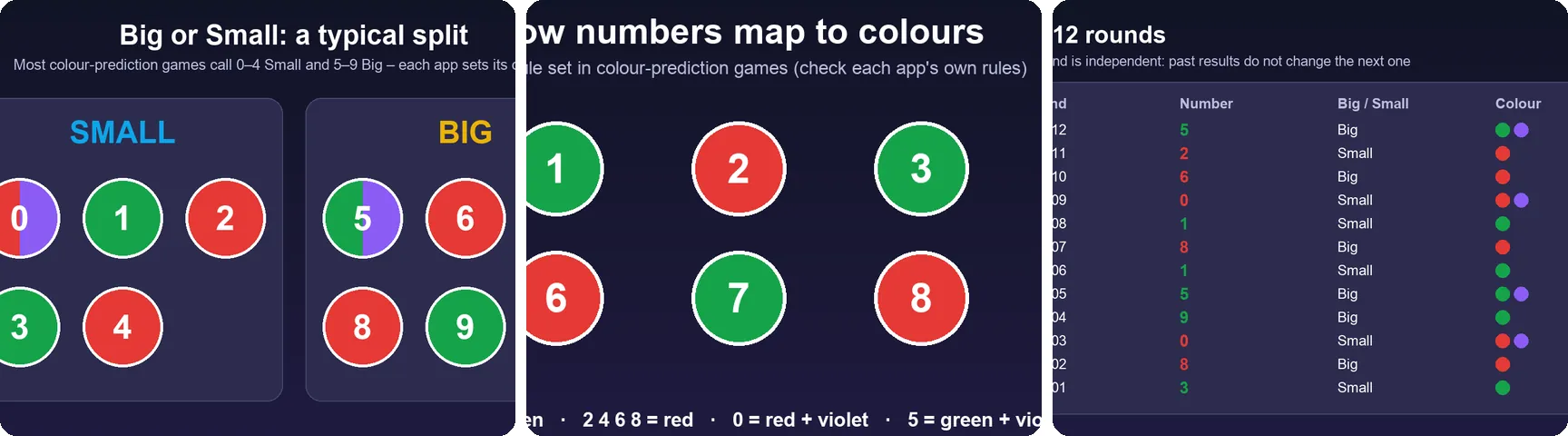
Follow the link and the typical color trading website shows a countdown, three colour buttons (green, red and violet), the numbers 0 to 9 and a Big or Small choice. Promotional pages usually say that each number maps to a colour and that Big means 5 to 9 while Small means 0 to 4. A results table of recent rounds sits underneath. These descriptions come from operator and affiliate pages, so they show how such sites typically present the game rather than a fixed standard. Our illustrations on this page are drawings, not screenshots of any real platform.
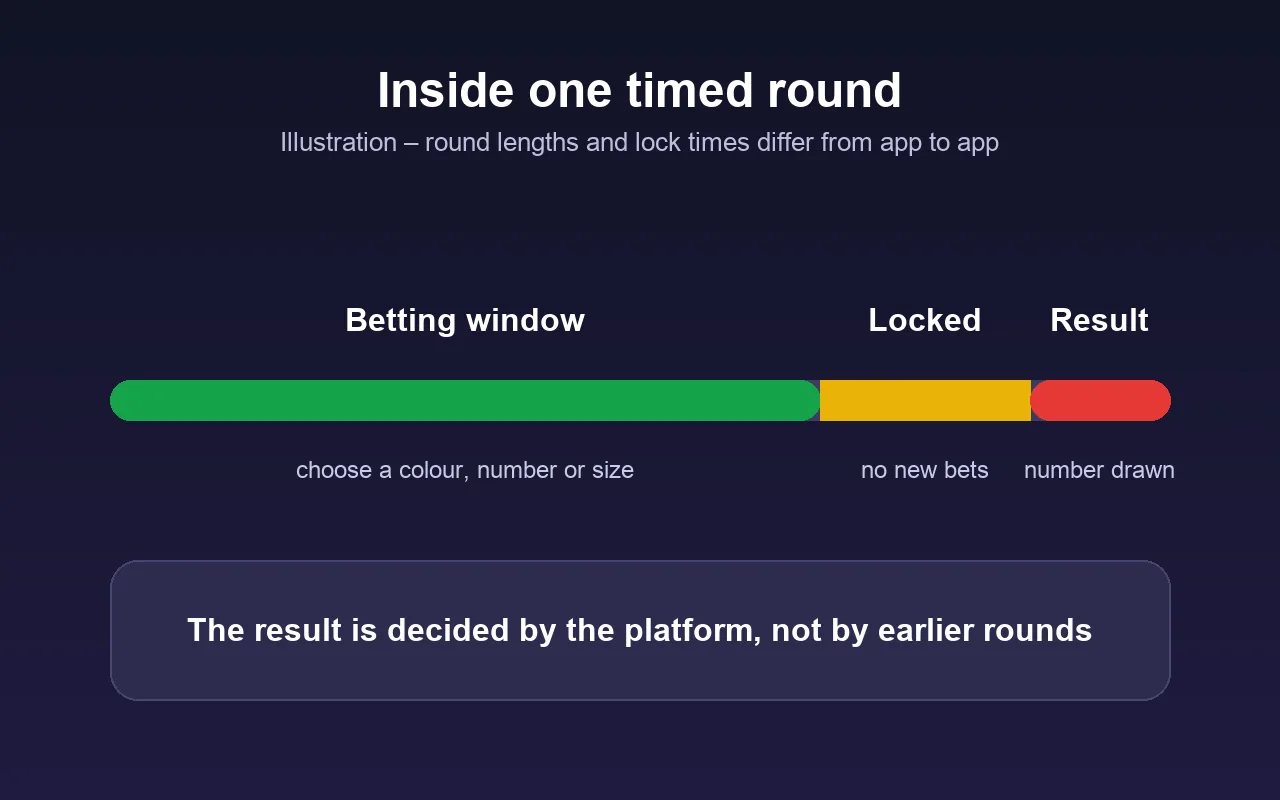
An education blog from Rupeezy, a SEBI-registered broker, adds the part promotional pages leave out: the platform's algorithm sets each result, rounds run for roughly 30 to 60 seconds, and the activity is gambling, outside the oversight of SEBI and RBI.
When the wallet will not pay out
The most common complaint in the 2021 reporting was not a lost bet but a balance that could not be withdrawn. Players in Bengaluru and Chennai told The News Minute that their wallets showed winnings, yet the sites asked them to deposit more before any withdrawal. Police complaints made little headway. An analyst quoted in the same report traced sixty such sites to IP addresses in China, which helps explain why accountability was so hard to find. A number on a screen is only a number until it reaches a bank account, and on these sites that step is the one that fails.
Warning signs on any color trading website
We do not name individual apps as safe or unsafe, because we have no verified basis for doing so. The signs below apply to any site in this genre, whatever its branding:
- the link reached you through a chat or SMS rather than a store you already use;
- the only way to install is an APK file from a web page;
- you are offered a reward for inviting other people;
- withdrawal requires a further deposit, a fee or a minimum you have not yet reached;
- no company name, address or grievance contact appears anywhere;
- the site asks for UPI or card details before you have seen any rules.
One sign alone may not prove fraud, but the genre tends to show several at once. The questions further down cover the most frequent doubts readers raise.
What enforcement has found so far
In August 2020 Hyderabad police broke up a colour-prediction betting racket. According to The News Minute, a Chinese national was arrested at Delhi's IGI Airport along with three other men, money was allegedly moved to accounts in Singapore, and the Enforcement Directorate began looking into the laundering side. In December 2021 Telangana officials said nearly 2,000 such betting apps were active, that operators hid behind fake IP addresses, and that victims received calls from Hong Kong numbers. Telangana bans such games. These cases show a pattern of offshore operators and untraceable money, not isolated bad actors.
The 2025 Act and the change on 1 May 2026
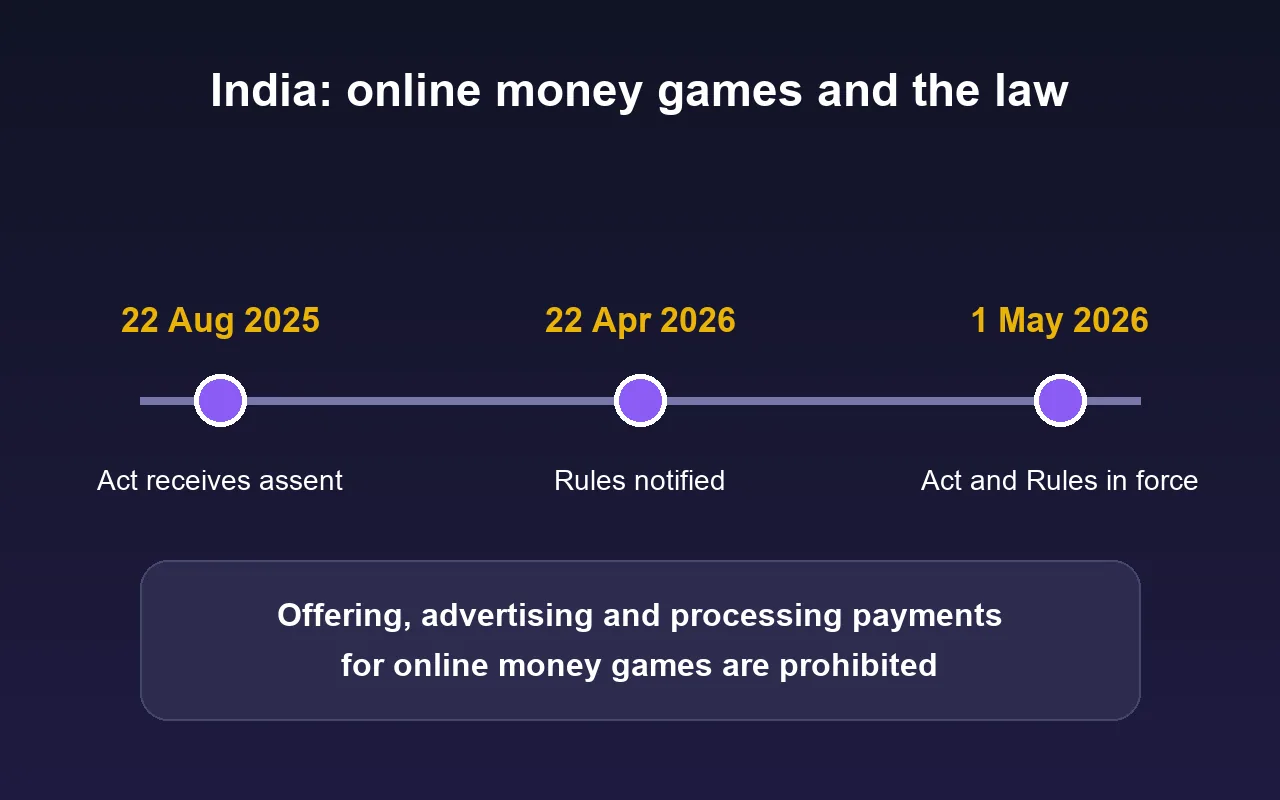
The Promotion and Regulation of Online Gaming Act, 2025 treats any online game where a user stakes money, or credits that convert to money, in the hope of a monetary gain as an online money game. It prohibits offering such games, advertising them and facilitating their payments, and the government can block their content. The Rules came into force on 1 May 2026 and set up the Online Gaming Authority of India, which decides whether a game falls under the definition. A paid colour-prediction round fits that definition on a plain reading; we found no government notice naming the genre, and this is not legal advice. For anyone receiving a forwarded link, the practical point is that banks and payment systems may no longer process money for these games.
Searching for a color trading game online in late 2026 therefore leads mostly to promoters, predictor tools and pages that cannot be traced to anyone accountable. If you are 18 or over and choose to bet anywhere, decide your stop point in money and minutes before you start, and keep to it. If gambling is causing stress or debt, Tele-MANAS can be reached on 14416 or 1-800-891-4416.
Your data while reading this guide
Referral codes: This page carries no referral codes and pays nobody for sending readers anywhere through invitations.
Contact details: We ask for no phone number, e-mail or messaging handle. Reading needs no form at all.
Money: There is no wallet, deposit field or UPI request here. Treat any such prompt elsewhere with caution.
Phone access: The page uses no contacts, SMS, camera or location permissions and installs nothing on your device.
Leaving the page: The top button opens an external page. Before typing anything there, check who runs it and what it asks.


Our score for the colour-link ecosystem
What works
- The round rules are usually shown on one screen before any stake
- Most warning signs, such as APK-only installs, are visible before signing up
- News reports and officials have described the pattern clearly since 2021
What to keep in mind
- Links arrive through friends who are often paid to recruit
- Reported cases of balances that could not be withdrawn without a new deposit
- Operators reported as offshore and hard to trace when complaints are made
Questions about forwarded colour links
A friend sent me a colour-prediction link with a code. Why?
News reports and Telangana cybercrime officials both describe apps that reward users for recruiting new players. Your friend may simply be enthusiastic, but the code usually means the sender gains something if you join and deposit. That does not make the friend dishonest; it does mean the recommendation is not neutral. Ask them whether they have withdrawn money to a bank account, not just seen a balance.
Can a colour-betting site legally take my deposit after 1 May 2026?
The Promotion and Regulation of Online Gaming Act, 2025 prohibits offering online money games, advertising them and facilitating their payments, and its Rules have applied since 1 May 2026. A paid colour round fits the Act's definition on a plain reading. Banks and payment systems are barred from processing such payments. We cannot advise on individual cases, but a site still collecting deposits is working against that law.
Why can I not find these colour sites on the Play Store?
In 2021 The News Minute reported that none of the apps it examined were on the Google Play Store, and Telangana officials said they were often absent from both Google Play and the App Store. A Play search we ran on 29 October 2026 showed only predictor and calculator utilities. The betting versions are passed around as APK files through websites and referral links instead.
What does it mean if a site asks me to deposit before I withdraw?
It matches the most common complaint in the 2021 reporting. Players in Bengaluru and Chennai saw winnings in their wallets but were told to add more money before any withdrawal, and police complaints made little progress. A demand for a fresh deposit, fee or tax before payout is a strong reason to stop sending money to that site.
Are the people running these colour sites based in India?
Reporting points in other directions. An analyst traced sixty such sites to IP addresses in China, Telangana officials described fake IP addresses and calls from Hong Kong numbers, and the 2020 Hyderabad case involved a Chinese national and money allegedly sent to Singapore. Most sites publish no company name or address, so a player usually cannot tell who holds the money.
Does this guide get paid when I click a colour-betting link?
This guide does not hand out referral codes and is independent of the operators behind these sites. We do not run any gaming service. The button at the top of the page leads to an external page; check who runs that page and what it asks for before typing any personal or payment details there. Being 18 or older is a minimum, not a reason to sign up.